Stinging insect nest removal prioritizes household safety by eliminating defensive colonies before accidental stings trigger medical emergencies. In Upper Midwest climates, fertilized queens emerge from overwintering…
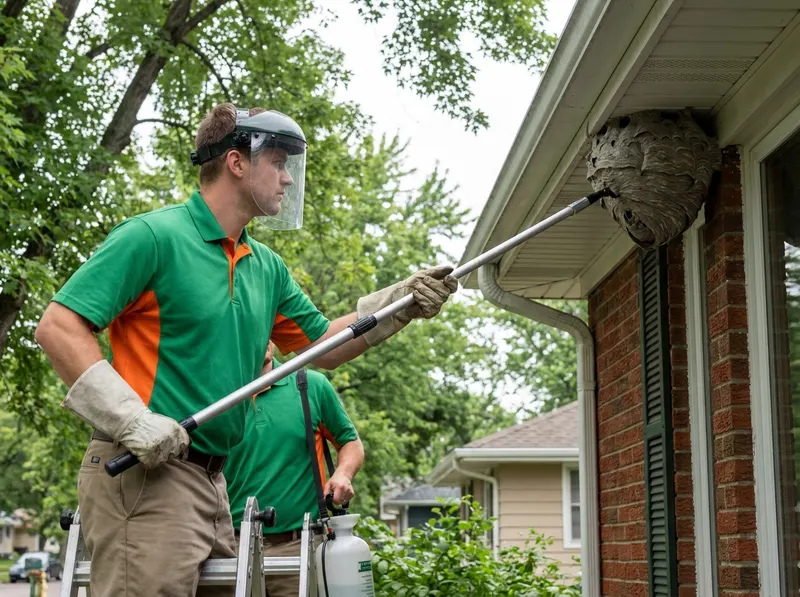
Stinging insect nest removal prioritizes household safety by eliminating defensive colonies before accidental stings trigger medical emergencies. In Upper Midwest climates, fertilized queens emerge from overwintering sites in early May to establish aerial or subterranean nests that expand to hundreds or thousands of workers by late August. Aerial paper wasps frequently build open-comb umbrella nests beneath the deep roof brackets and open eaves of Craftsman bungalows in Longfellow, Linden Hills, and Bryn Mawr. In contrast, subterranean yellowjackets construct concealed paper envelopes inside abandoned rodent burrows or along root systems near the Chain of Lakes, creating immediate sting hazards for children and pets traversing lawn spaces.
Selecting professional nest extraction prevents structural interior incursions that occur when unguided store-bought sprays drive defensive workers inward. When yellowjackets nest within exterior wall voids or behind cedar lap siding in historic homes across Whittier and Northeast Minneapolis, spraying an aerosol propellant into the exterior entrance often forces stinging workers through electrical outlets, baseboard gaps, or recessed lighting directly into interior bedrooms. Clinical removal applies micro-targeted applications directly into the central brood comb, followed by complete physical detachment of the nest material to prevent secondary infestations from dermestid carpet beetles, followed by mechanical exclusion using silicone-polyurethane sealants and copper mesh.
Structural access requirements dictate the service approach. An exposed paper wasp nest hanging from a first-story fascia board requires straightforward knockdown and physical scrapers, representing the base service tier. A mature bald-faced hornet carton suspended 25 feet high in a mature bur oak canopy near Minnehaha Falls or Lake Harriet requires extension ladders, full biological protective suits, and directional collection vacs. In instances involving wall voids, technicians utilize thermal tracking to pinpoint the central brood without needlessly tearing down expansive plaster or drywall sections, maintaining home structural integrity while eliminating sting risks.
Every job gets a firm, written price after a free on-site visit.
Tell us about your stinging insect nest removal job in Minneapolis and we'll send a clear, written quote, usually the same day.
 Crovella Bug Services