Property owners facing structural distress or nocturnal wall activity require targeted, biological pest control services in Minneapolis to restore indoor safety. High winter heating demands and humid river corridors create distinct biological pressures on local foundations, leading seasonal species straight into structural framing.
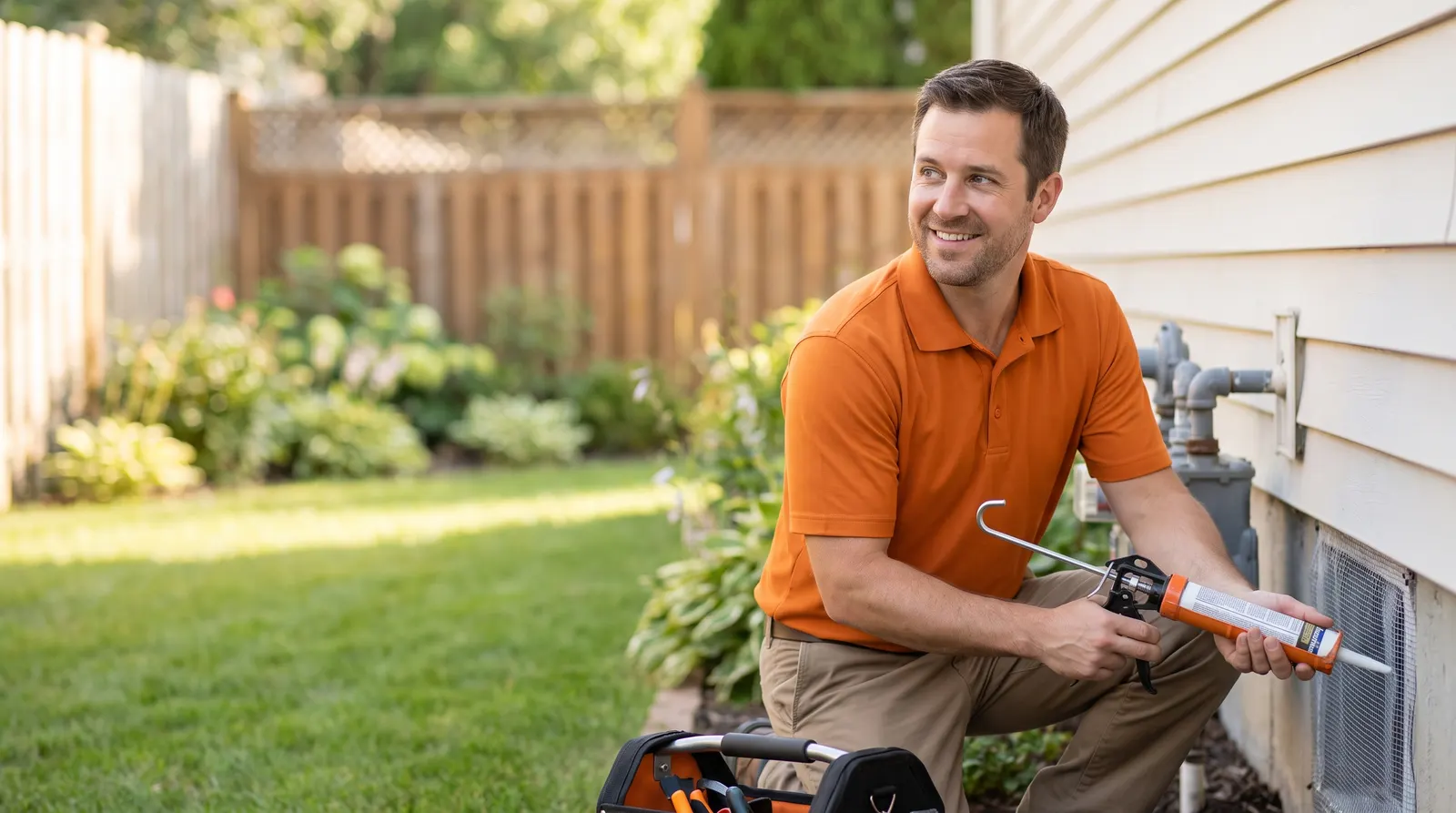
A professional provider of pest control services in Minneapolis is an integrated pest management entity that inspects residential foundations, seals thermal entry gaps, and eliminates biological infestations across Hennepin County properties.
Every service reflects the same meticulous attention to detail, whether it's a single job or a larger pest control services project across Minneapolis.
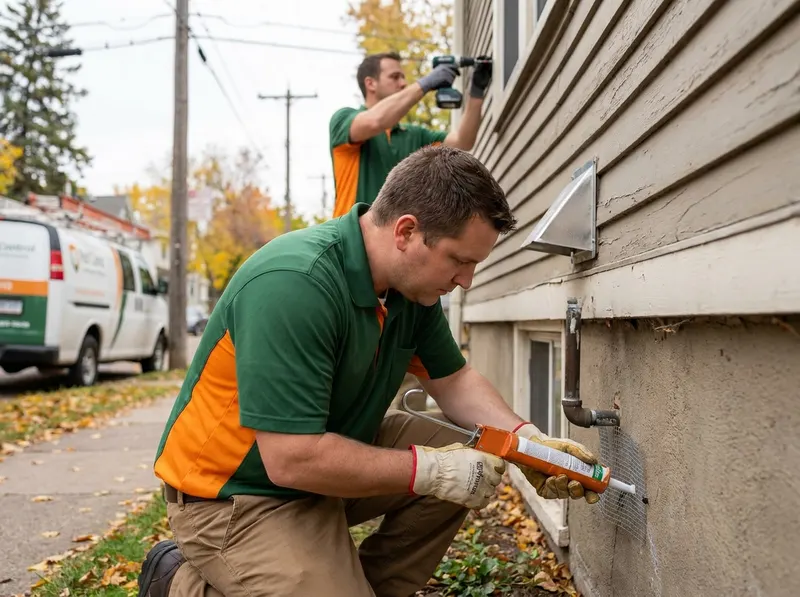
Mechanical perimeter defense stopping Mus musculus (house mouse) and Rattus norvegicus (Norway rat) migrations into domestic living quarters. Technicians identify sub-quarter-inch entry penetrations along limestone and poured foundations, sealing perimeter gaps with 300-series stainless steel mesh, heavy-gauge galvanized hardware cloth, and moisture-cured elastomeric sealants. Strategic interior trapping protocols rapidly extract nesting populations from utility chases and basement drop ceilings without scattering rodenticides into pet-accessible living areas. Standard diagnostics and localized sealings begin at $150 to $350, securing structural envelopes against winter thermal invasions.
Get a quote →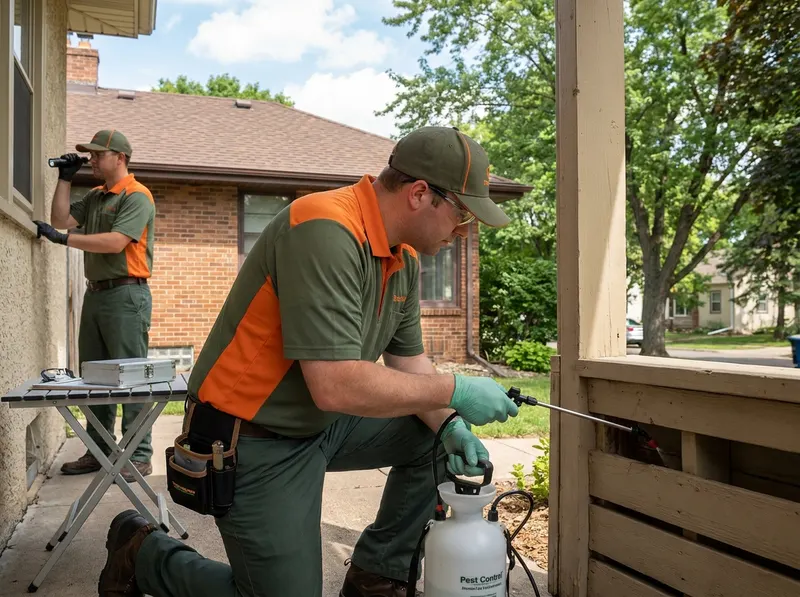
Biologically directed eradication focused on Camponotus pennsylvanicus nesting inside water-damaged wall studs, subfloors, and window framing. Service protocols bypass surface broadcast sprays to deliver non-repellent transfer chemistry directly into satellite and parent gallery networks. By targeting interior foraging trails and treating external perimeter moisture zones, worker ants transport active micro-doses into the primary queen chamber. Field inspections evaluate roof leak zones, plumbing penetrations, and wood-to-ground contacts to systematically correct the conditions driving wood destruction, typically priced between $225 and $495 depending on gallery dispersion.
Get a quote →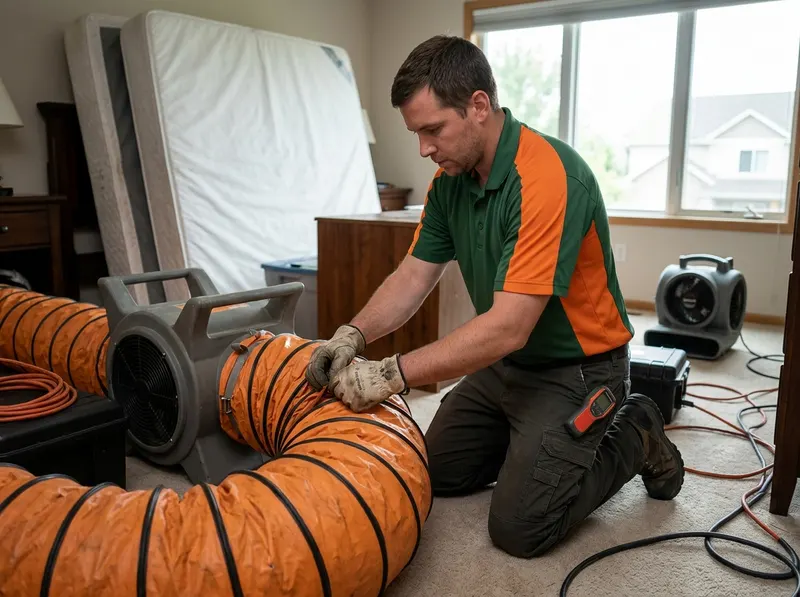
Definitive multi-stage thermal and targeted chemical remediation for Cimex lectularius infestations in residential sleeping spaces. Technicians conduct clinical inspections of mattress seams, box springs, headboards, baseboards, and electrical outlets to map harborage clusters. Treatment uses high-output electric convective heaters to elevate room temperatures to the lethal thermal threshold of 122°F to 135°F for sustained intervals, destroying adult insects, nymphs, and eggs in a single targeted evolution. Targeted residual desiccant dusts are installed inside wall voids to provide ongoing perimeter protection, with single-room and multi-room treatments starting from $375 to $950.
Get a quote →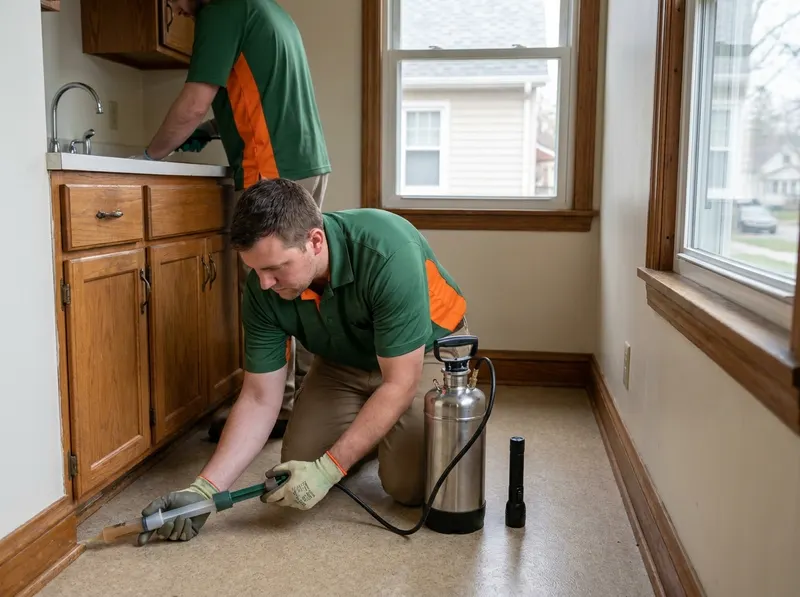
Comprehensive population extraction targeting Blattella germanica (German cockroach) clusters in kitchens, multi-family pipe chases, and food-handling zones. Technicians employ high-efficiency particulate air (HEPA) vacuum extraction to mechanically reduce adult harborage points on contact, clearing active nesting areas behind motor housings and cabinetry. Technicians then apply insect growth regulators (IGRs) combined with rotation-specific bait matrices within unexposed structural seams, disrupting biological reproductive cycles while keeping domestic living surfaces chemically neutral. Initial extraction and bait placement protocols range between $175 and $385.
Get a quote →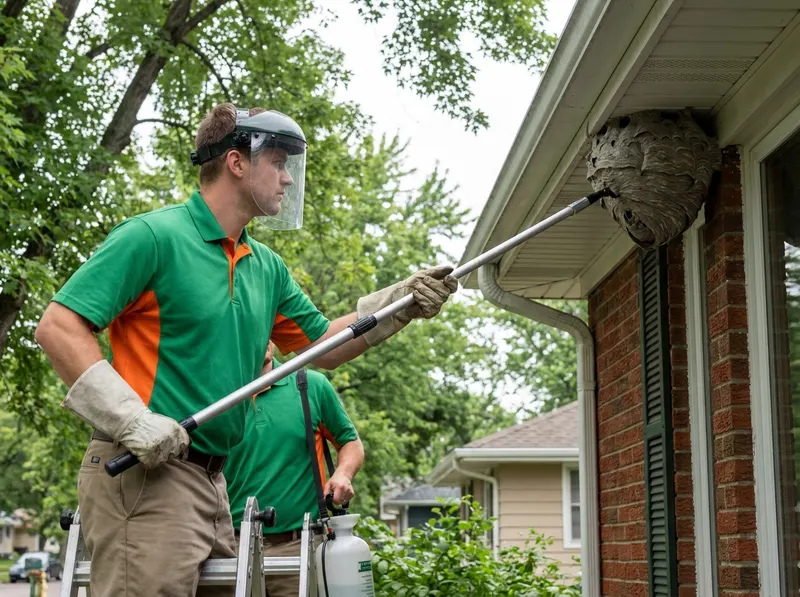
Rapid neutralizations of yellowjacket subterranean burrows, paper wasp structural eaves, and bald-faced hornet aerial nests. Technicians use protective equipment and precision void injection equipment to deliver freeze-action aerosols or targeted botanical agents straight into the central brood nest. Structural entries around soffits and siding flashing are systematically treated to prevent displaced foragers from breaching living spaces. Once biological activity ceases, physical aerial nests and subterranean cones are extracted and sealed, terminating pheromone markers that trigger re-nesting, with single-colony removals starting at $150 to $275.
Get a quote →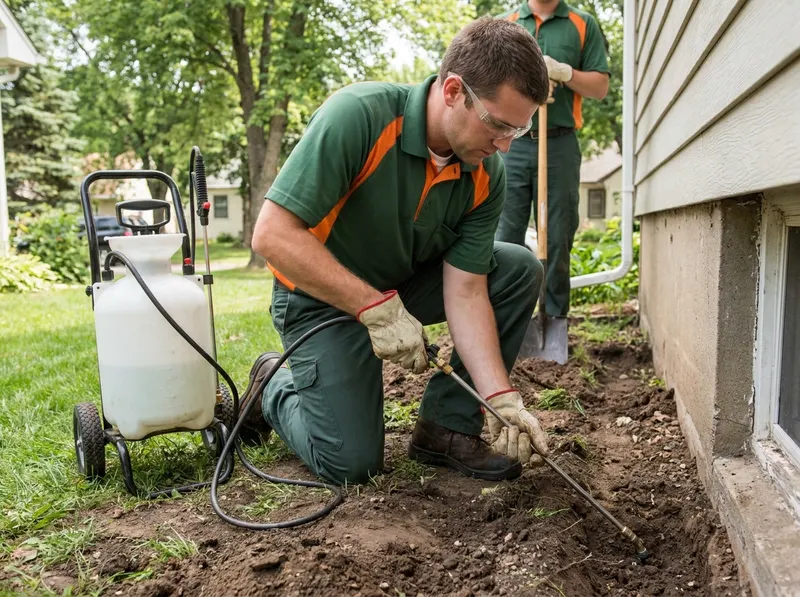
Targeted subterranean defense protocols defending structural support beams and sill plates against Reticulitermes flavipes colonies. Field crews trench and treat foundation margins with non-repellent termiticides, forming a continuous barrier zone that foraging termites pass through undetected. The carrier chemical is transported across the underground colony matrix via grooming and food sharing, arresting chitin synthesis and neutralizing the reproductive core without internal drilling where possible. Comprehensive liquid soil barriers and exterior perimeter monitoring systems run between $550 and $1,450.
Get a quote →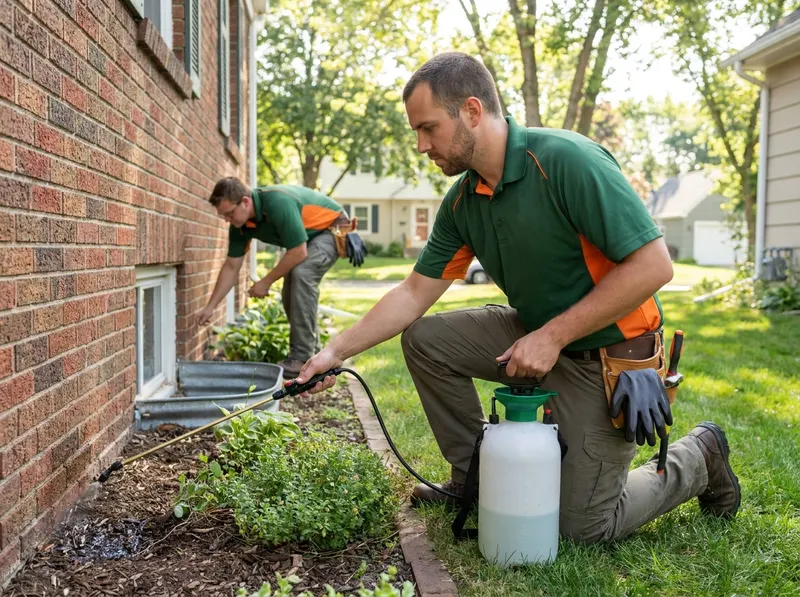
Systematic exterior barrier applications timed to spring thaw and late-summer aggregations of pavement ants, boxelder bugs, and nuisance spiders. Treatment applies microencapsulated non-staining perimeter suspensions 3 feet up the exterior masonry wall and 5 feet outward along the soil line, targeting weep holes, basement window wells, and sill gaskets. This prevents exterior foraging insects from crossing foundation cold-joints or penetrating lower-level window casements during high-humidity seasons, establishing uninterrupted perimeter protection at $150 to $240 per seasonal application.
Get a quote →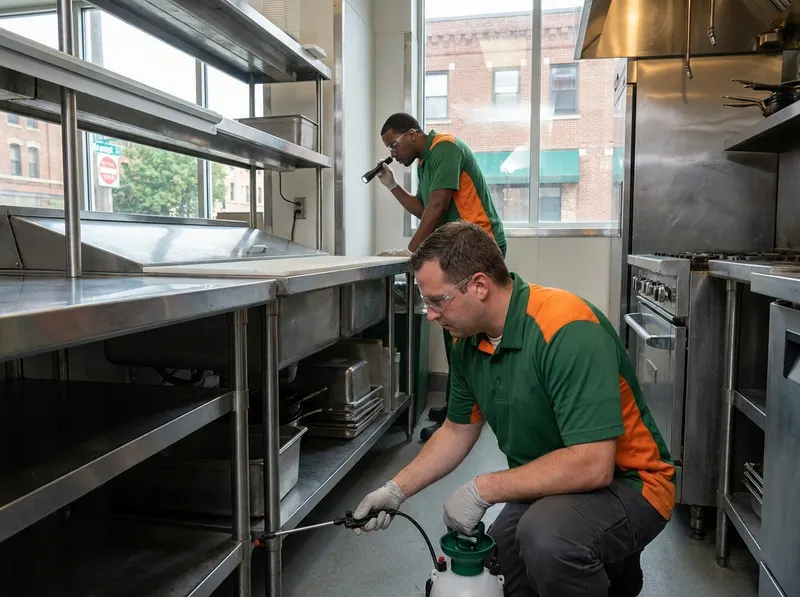
Regulatory-compliant integrated pest control built for commercial kitchens, residential rental portfolios, and mixed-use properties. Technicians establish tamper-resistant exterior rodent monitoring bait stations, internal mechanical traps, and non-pesticidal sanitation audits to maintain health-code compliance. Routine documentation includes digital barcode scanning of monitoring points, insect trap trending reports, and immediate structural-gap remediation, safeguarding facility integrity, food handling cleanliness, and tenant living standards. Service plans run on monthly or quarterly schedules, starting from $150 to $450 per inspection cycle.
Get a quote →You get a firm, itemized quote for your pest control services before any work begins, no surprises, no pressure.
Careful prep, tidy work, and a full cleanup when we are done. We treat your home and belongings like our own.
The same trusted, background-checked team from the first call to the final check.
Selecting the right pest intervention protocol depends directly on the specific pest taxonomy, infestation maturity, and the age of the structure's building envelope. If property owners observe frass shavings or hollow-sounding framework along rim joists during warm months, choosing targeted carpenter ant structural injections eliminates satellite colonies nesting within damp lumber; if the issue involves nighttime rustling, droppings along baseboards, or shredded attic insulation, selecting physical perimeter rodent exclusion mechanically blocks mice from entering foundation expansion joints. The fundamental operational trade-off centers on perimeter surface repellent sprays versus comprehensive physical exclusion: surface barrier sprays offer immediate knockdown of exterior foraging pests at an initial service minimum of $150, but fail to prevent interior migrations once seasonal temperatures plummet below zero; full mechanical exclusion requires structural labor and sealing materials ranging between $250 and $650, yet permanently eliminates recurring entry access without maintaining perpetual indoor pesticide footprints.
When addressing multi-unit residential layouts or older basements with fieldstone foundations, choosing full-structure Integrated Pest Management (IPM) targets the biological microclimate, moisture levels, and entry vectors simultaneously rather than displacing the colony into adjacent living quarters.
Every project gets a firm, written price after a free on-site visit. Ranges below for orientation.
Tell us about your pest control services job and we'll send a clear, written quote, usually the same day. Or just call and talk to a real Minneapolis pro.
(612) 222-3784
Properties throughout Minneapolis face distinct seasonal biological stresses due to older housing foundations, high water tables, and severe temperature fluctuations. Historic homes in neighborhoods like Whittier, Northeast Minneapolis, and Linden Hills frequently feature fieldstone, soft brick, or mortar-seamed basements that settle, leaving 1/4-inch to 1/2-inch gaps near sill plates. When temperatures drop below zero across Hennepin County, field mice and Norway rats naturally follow basement thermal vents inward. Concurrently, proximity to the Mississippi River Gorge and the Chain of Lakes drives summer moisture directly into structural framing, accelerating wet-wood rot that attracts carpenter ants.
Free estimates for Minneapolis & the surrounding area.
 Crovella Bug Services