Carpenter ants do not consume wood fibers for nutrition; instead, workers carve smooth galleries through moist wall studs, subfloors, and window headers to establish brood chambers. In historic Minneapolis residences,…
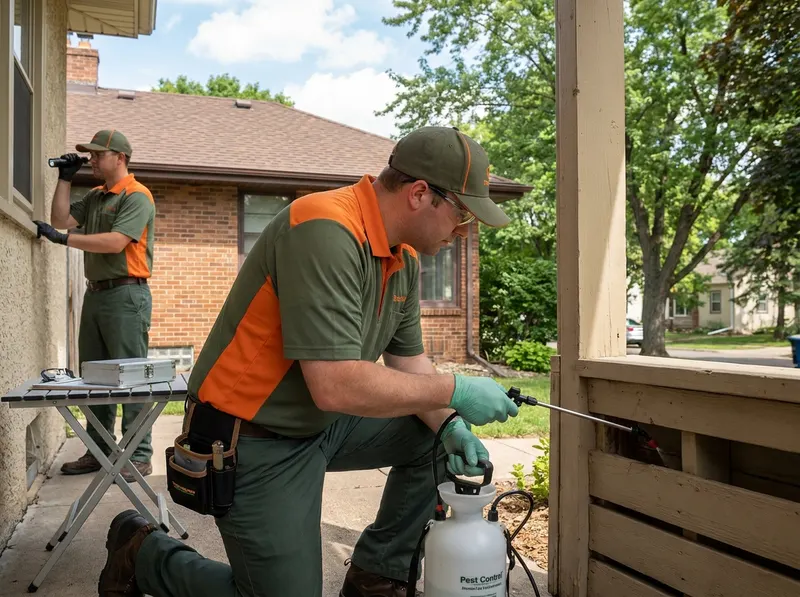
Carpenter ants do not consume wood fibers for nutrition; instead, workers carve smooth galleries through moist wall studs, subfloors, and window headers to establish brood chambers. In historic Minneapolis residences, such as Craftsman bungalows in Longfellow, Victorian homes in Powderhorn Park, and turn-of-the-century framing in Whittier, unresolved moisture from roof valleys, ice dams, or damp stone foundations creates primary nesting habitat. Standard over-the-counter repellant sprays scatter active foraging columns into interior living areas without eliminating the queen. Clinical eradication requires locating the high-moisture satellite colony indoors and tracing satellite trails back to primary parent nests situated in rotting stumps or landscape ties near the Mississippi River Gorge or Chain of Lakes.
Technicians employ acoustic listening tools and calibrated moisture sensors to identify structural voids exhibiting dampness above 18 percent. If hollow wall cavities behind shower tiles in Bryn Mawr or roof leak points in Northeast Minneapolis show concentrated frass, wood shavings mixed with insect fragments, direct micro-injection of non-repellent fipronil or targeted insect growth regulators is placed into the stud bay. Foraging ants then track the undetectable formulation through grooming behavior directly back to the egg-laying queen inside the parent nest. This biological vulnerability collapses the entire colony within 7 to 21 days without broadcasting broad-spectrum aerosols throughout the indoor breathing zone.
Structural protection demands addressing exterior-to-interior pathways alongside chemical elimination. In densely packed neighborhoods like Uptown, Lynnhurst, and Linden Hills, tree canopies touching fascia boards provide uninterrupted aerial bridges above foundation treatments. Structural modification includes clearing branch contact within 3 feet of rooflines, void-sealing entry points around exterior utility conduits with copper mesh and silicone sealants, and ventilating basement joists. The trade-off between localized spot treatments and full-property perimeter protection hinges on whether satellite colonies have breached interior framing: spot applications arrest an isolated bathroom leak infestation, whereas dual interior-exterior barrier applications prevent recolonization from mature Hennepin County urban tree stock.
Every job gets a firm, written price after a free on-site visit.
Tell us about your carpenter ant colony elimination job in Minneapolis and we'll send a clear, written quote, usually the same day.
 Crovella Bug Services